

February 2014
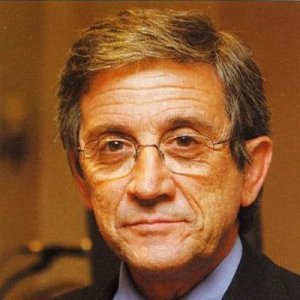
José Pimentel
Vice-President of the APO
I hope that this time it has finally happened, and that neurologists have now definitively drawn closer to our association, just as our association has reached out to them. In fact, at the last Winter Meeting, held in Évora, around a quarter of the participants were neurologists. As far as I’m concerned, it was a very successful meeting. Contributing to this, in addition to the excellent organisation, was the chosen topic – acute vestibular syndrome – which was of interest to both ENT specialists and neurologists. Whilst I am aware that the former will always play a key role in our association – firstly because the causes of dysfunction of the vestibular pathway, essentially the link between the two specialities, are primarily peripheral, and secondly because they carry out cochleovestibular testing – the involvement of the latter brings first-hand experience of the conditions affecting the “second part” of that pathway.
In our country, unlike in others, neurologists show little interest in otoneurology, just as they do, for example, in neuro-ophthalmology. And yet, these two sub-specialities are closely linked – anatomically, physiologically and pathologically – to the nervous system, and neurologists have to deal with them on a “daily” basis. Nor should we underestimate the importance of trying to attract more ear, nose and throat specialists to our “cause”. It is therefore urgent that we try to change this “state of affairs”.
The APO can play an important role. Firstly, it should continue along the path that has now been (re)launched, by selecting topics of mutual interest to neurologists and ENT specialists for its scientific meetings, and by facilitating their respective attendance at these events. Secondly, it should work with the scientific societies of both specialities to encourage the exchange of topics (and doctors) of mutual interest at their respective scientific meetings. Finally, it should encourage the respective Colleges of the Portuguese Medical Association to include an otoneurology placement in the training programmes for residents in both specialities; in the case of neurologists, this should take place at a hospital where cochleovestibular function testing is carried out.
Let’s make the most of this “wave” and ride it skilfully enough so that we don’t lose our enthusiasm for “getting back out on the water”, and so that we can pass that enthusiasm on to new “surfers”.